
CONNECTED VISIBILITY
The Alignment
Imperative
Marketing teams cannot drive consistent business results through disconnected planning systems.
Modern marketing has evolved into a highly technical, cross-functional, omnichannel operation — but most organizations still plan in fragmented spreadsheets, decks, and work management tools that were never designed to align strategy, timing, channels, and customer experience.
Modern Marketing Has Outgrown Its Planning Model
Marketing now spans global, regional, brand, division, function, and channel teams — each operating with different priorities, timelines, and workflows. Yet most organizations still attempt to coordinate this complexity using disconnected spreadsheets, slides, calendars, and work management tools that reinforce siloed planning across teams.
The result is not simply operational inefficiency. It is a structural visibility problem that weakens strategic alignment, customer experience consistency, investment coordination, and revenue performance.
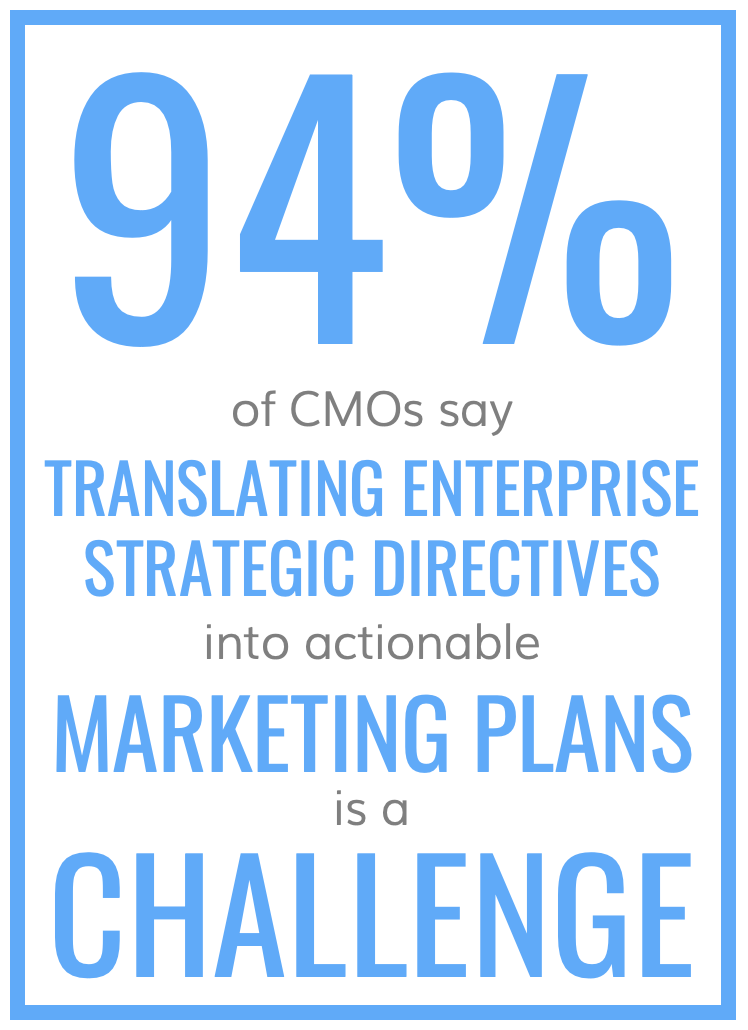
Research from Gartner found that 94% of CMOs say translating enterprise strategic directives into actionable marketing plans remains a challenge.
Misalignment Creates Hidden Operational and Revenue Costs
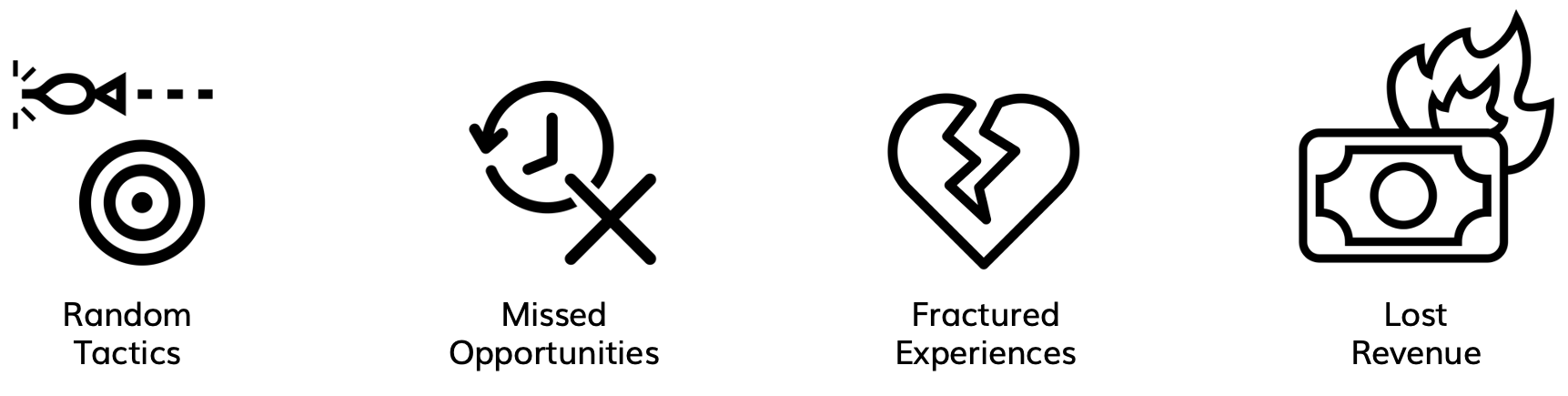
When planning systems are disconnected, organizations lose visibility into what is happening across teams, channels, and markets. The consequences compound across the enterprise:
- Duplicate content and redundant work
- Missed cross-channel opportunities
- Fragmented customer experiences
- Channel-centric decision making
- Inconsistent messaging and timing
- Poor investment coordination
- Reduced agility during market shifts
- Revenue opportunities left unrealized
“When social, email, and website messaging are at odds, you look like you don’t know what you’re doing. It fractures customer trust in your brand and derails prospects on the path to purchase.”
– Director of Marketing Operations
Manufacturer and Global Retailer
Research from the CMO Council and Televerde found that CMOs cite organizational silos as their biggest internal challenge to meeting revenue targets.
Disconnected planning environments limit leadership’s ability to see how strategy is operationalized — or where implementation is drifting off course.
Not sure how much your current toolset is contributing to these challenges?
Our two-minute Planning Tool Assessment helps identify gaps in visibility, alignment, agility, and integrated planning. Learn more →
The Gap Exists Between Strategy and Execution
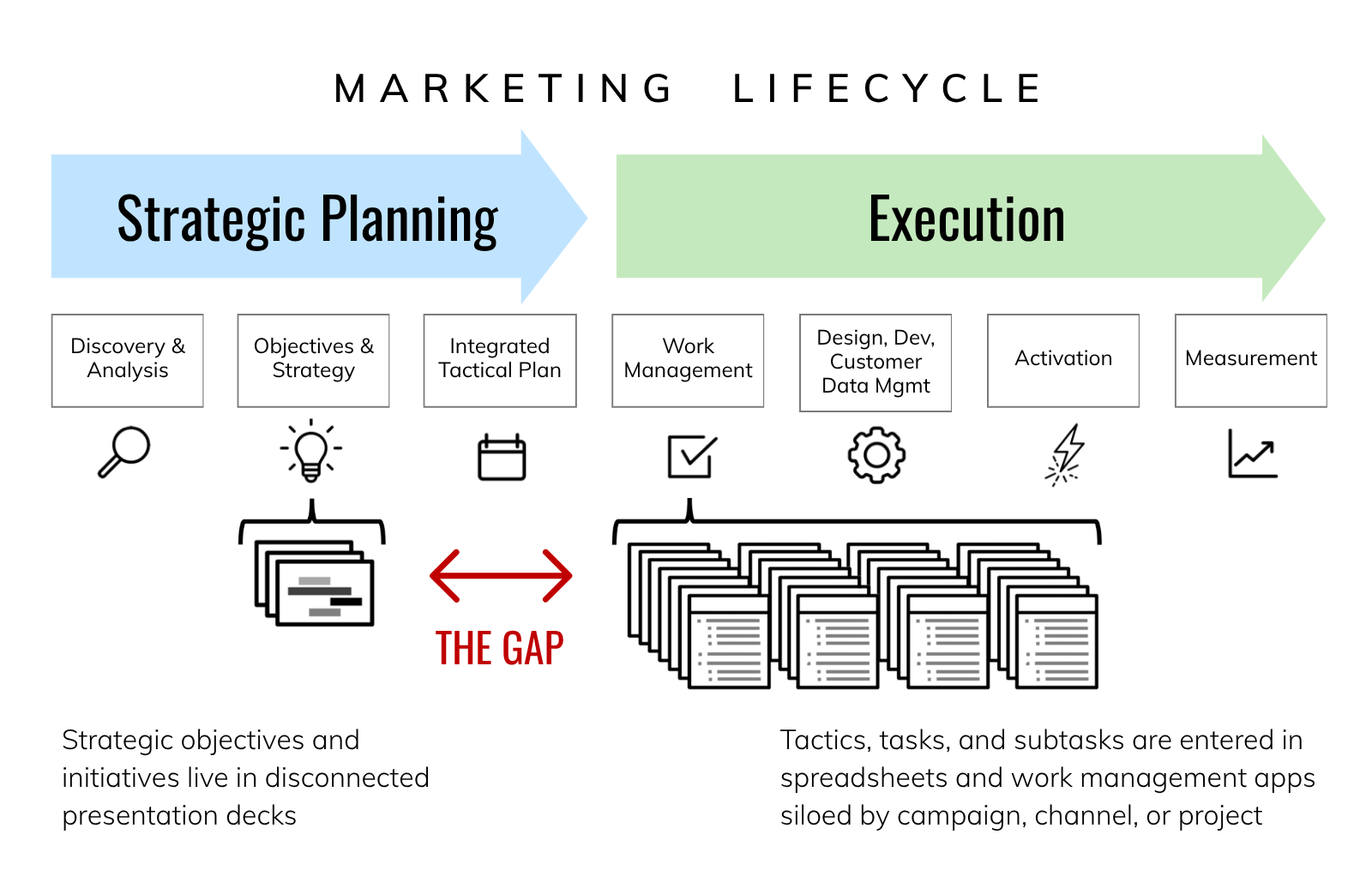
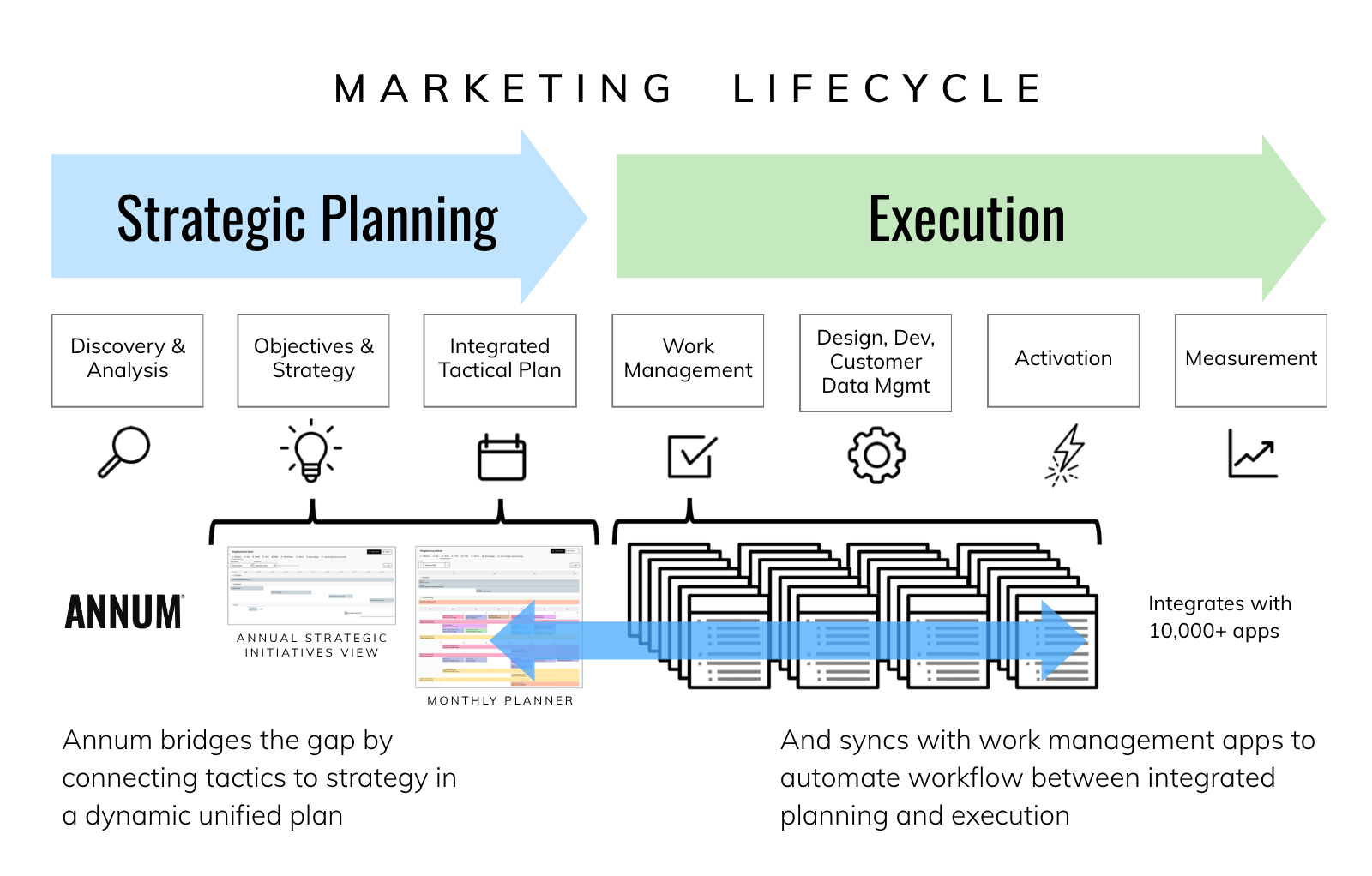
Most marketing planning environments separate strategic planning from operational execution.
Leadership defines strategic objectives, initiatives, investment priorities, and timing in disconnected high-level presentation decks. Teams then move execution into siloed spreadsheets and project management systems organized around campaigns, channels, and projects.
What’s missing is the integrated planning layer in between, where strategy is translated into coordinated tactical plans across teams, channels, investments, and customer experiences.
Without that connected planning layer:
- Tactics become disconnected from strategic objectives
- Channels are optimized independently
- Investment timing becomes difficult to coordinate
- Customer experiences fracture across touchpoints
Leadership gains visibility into projects and tasks, but not into how strategy is operationalized across the broader marketing ecosystem.
Today’s Marketing Requires a Connected Strategy-to-Plan Loop
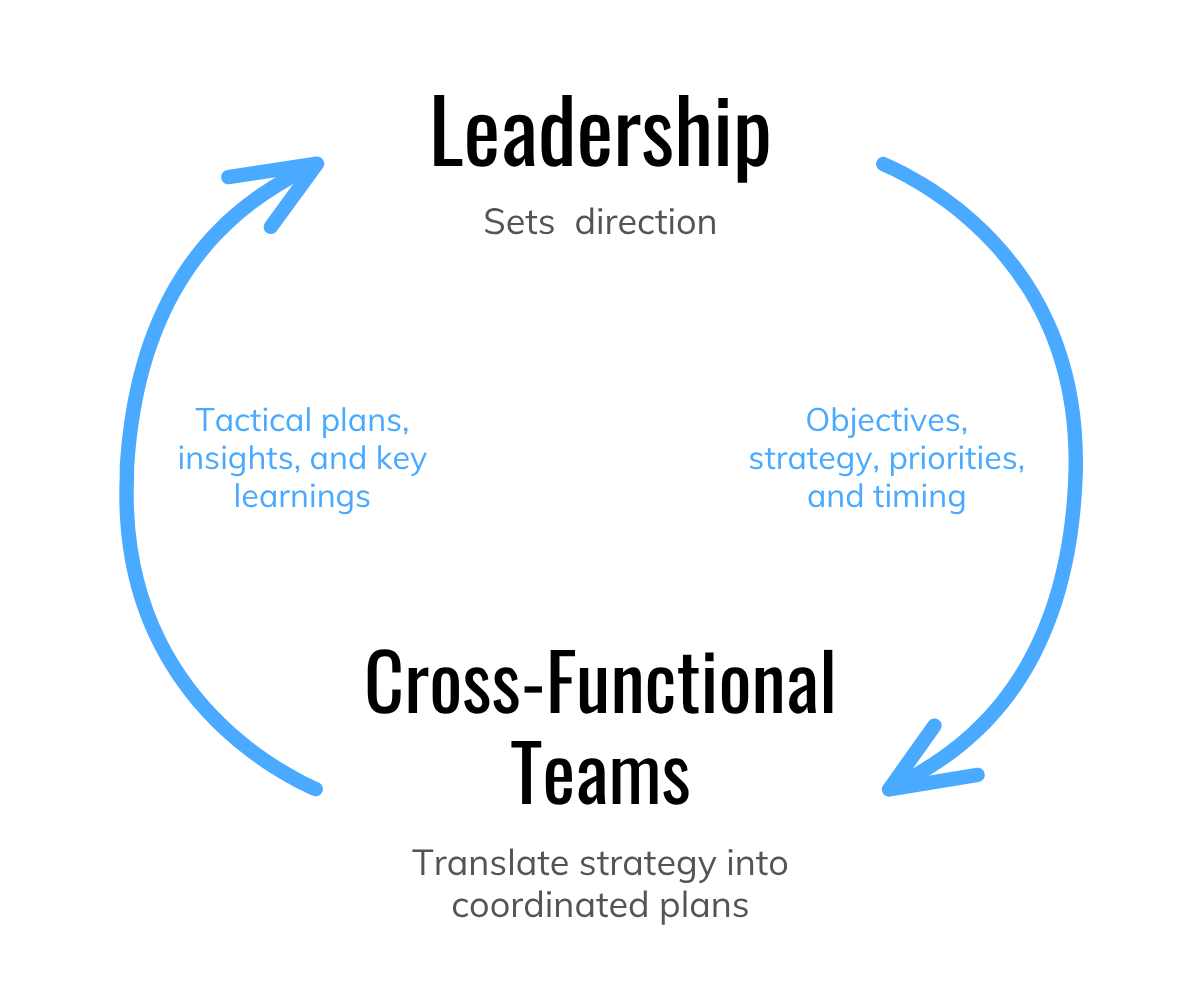
High-performing organizations operate through a connected top-down and bottom-up planning model that continuously aligns strategic direction with tactical reality.
Leadership establishes business objectives, strategic priorities, investment direction, and success metrics, while cross-functional teams operationalize those strategies through coordinated planning informed by real-time market conditions, customer insights, and executional realities.
This creates a connected strategy-to-plan loop where strategic direction and tactical execution continuously inform one another — improving visibility, coordination, agility, and the organization’s ability to operationalize integrated planning across the broader marketing ecosystem.
Leadership defines
- Business and marketing objectives
- Investment priorities
- Key initiatives and campaigns
- Success metrics
- Strategic timing
Cross-functional teams translate strategy into action
- Coordinated tactical plans
- Cross-channel alignment
- Market-informed execution
- Executional feedback loops
Connected Planning Models Create Stronger Business Impact
When teams gain visibility across initiatives, channels, timing, content, investments, and customer touchpoints, integrated planning becomes operationalized instead of aspirational.
Organizations become better equipped to align efforts across channels, coordinate investment timing, identify disconnects and opportunities earlier, and improve customer experience consistency across the broader marketing ecosystem.
Connected planning environments create a transparent strategy-to-tactical planning model within a unified planning environment, empowering organizations to operationalize integrated planning across teams, channels, initiatives, and customer experiences.
Leadership gains clearer visibility into how strategy is being operationalized:
- Where investments are concentrated
- Which initiatives are under-supported
- How activity aligns across the organization
- What customers are experiencing across channels
As integrated planning becomes more operationalized, organizations can adapt more quickly to changing market conditions, reduce duplicated efforts, improve prioritization, and make faster strategic decisions with greater confidence — strengthening alignment between leadership direction, investment priorities, and executional reality.
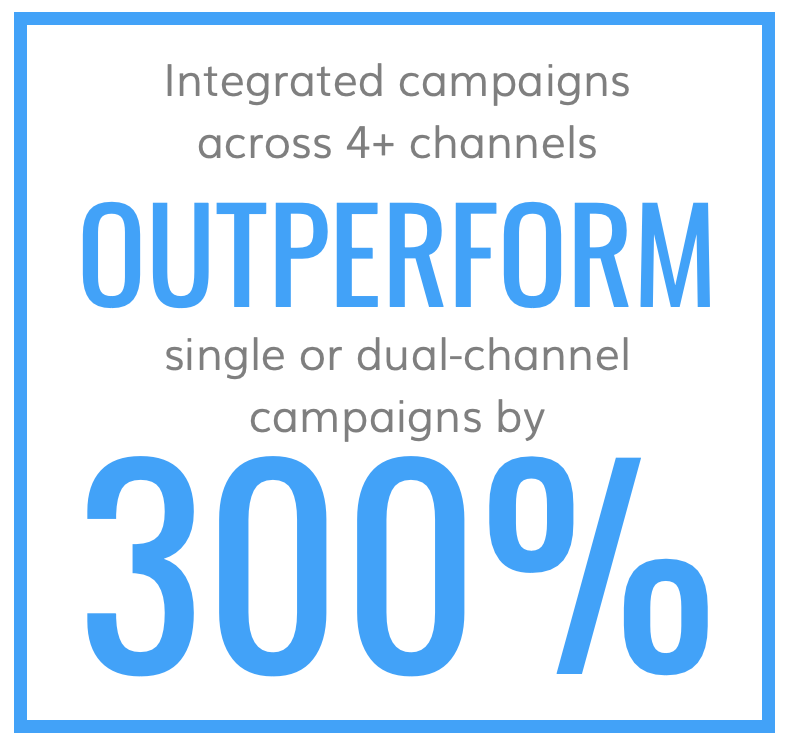
Research from Gartner found that integrated campaigns across four or more channels outperform single- or dual-channel campaigns by as much as 300%.
Annum Was Built to Operationalize Integrated Planning
Annum is unified planning software designed to help marketing organizations operationalize integrated planning through connected visibility across strategy, initiatives, channels, timing, investments, and tactical execution.
Instead of separating strategic planning from day-to-day marketing activity across disconnected tools, Annum brings planning together within a unified planning calendar that creates connected visibility across teams, channels, initiatives, and investments.
Organizations use Annum to:
- Connect strategic objectives and initiatives to integrated tactical plans
- Coordinate planning across teams, channels, and customer touchpoints
- Align timing, messaging, investments, and strategic priorities across the organization
- Identify gaps, overlaps, conflicts, and missed opportunities earlier in the planning process
- Make more informed strategic decisions through connected visibility across initiatives, objectives, audiences, and channels
- Maintain a unified view of what is launching across the broader marketing ecosystem
The result is a connected strategy-to-tactical planning model within a unified planning environment that makes integrated planning operational across the organization.
Integrated Planning Connected to Execution
For organizations using work management tools, Annum helps connect integrated tactical planning with downstream execution workflows.
Integrations synchronize tactical plans and execution workflows across systems to eliminate duplicate data entry and help maintain alignment between strategic priorities, tactical plans, and execution — whether teams plan directly within Annum, within work management platforms, or across a combination of both environments.
This creates a more connected planning model where strategy, integrated planning, and execution remain aligned across the broader marketing ecosystem without forcing organizations into a single way of working.
Unified Visibility Across Business Units
For organizations with multiple planning layers, Annum’s patented parent-child connected plan structure extends visibility across brands, product categories, regions, franchise locations, and functions while allowing teams to plan independently within their own calendars.
The result is a connected planning environment where leadership gains broader organizational visibility while teams maintain the flexibility needed to focus on their specific market and audience.
It’s time to close the gap.
Ready to replace disconnected planning?
See how Annum connects strategy and integrated tactical planning within one unified planning environment.