
TOP DOWN, BOTTOM UP STRATEGIC LOOP
How Unified Planning Works
Strategic initiatives, campaigns, tactics, channels, timelines, and organizational priorities come together within one unified planning environment, helping organizations align omnichannel customer experiences while giving leadership visibility into strategy in action.
Traditional Marketing Planning Disconnects Strategy From Customer Experience Reality
Modern marketing organizations operate across an increasingly complex mix of strategic initiatives, campaigns, channels, teams, agencies, business units, and customer touchpoints. Yet marketing planning remains fragmented with strategy mapped out within static presentations and tactical plans scattered across spreadsheets, disconnected marketing calendars, and work management tools designed for execution rather than integrated marketing planning visibility.
Teams have no visibility into how channels and tactics connect to strategic priorities and campaigns. Leadership has no visibility into what is in market when. There is no holistic view of the planned customer experience.
The result is not simply operational inefficiency. It is a structural visibility problem that weakens strategic alignment, customer experience cohesiveness, investment coordination, and revenue performance.
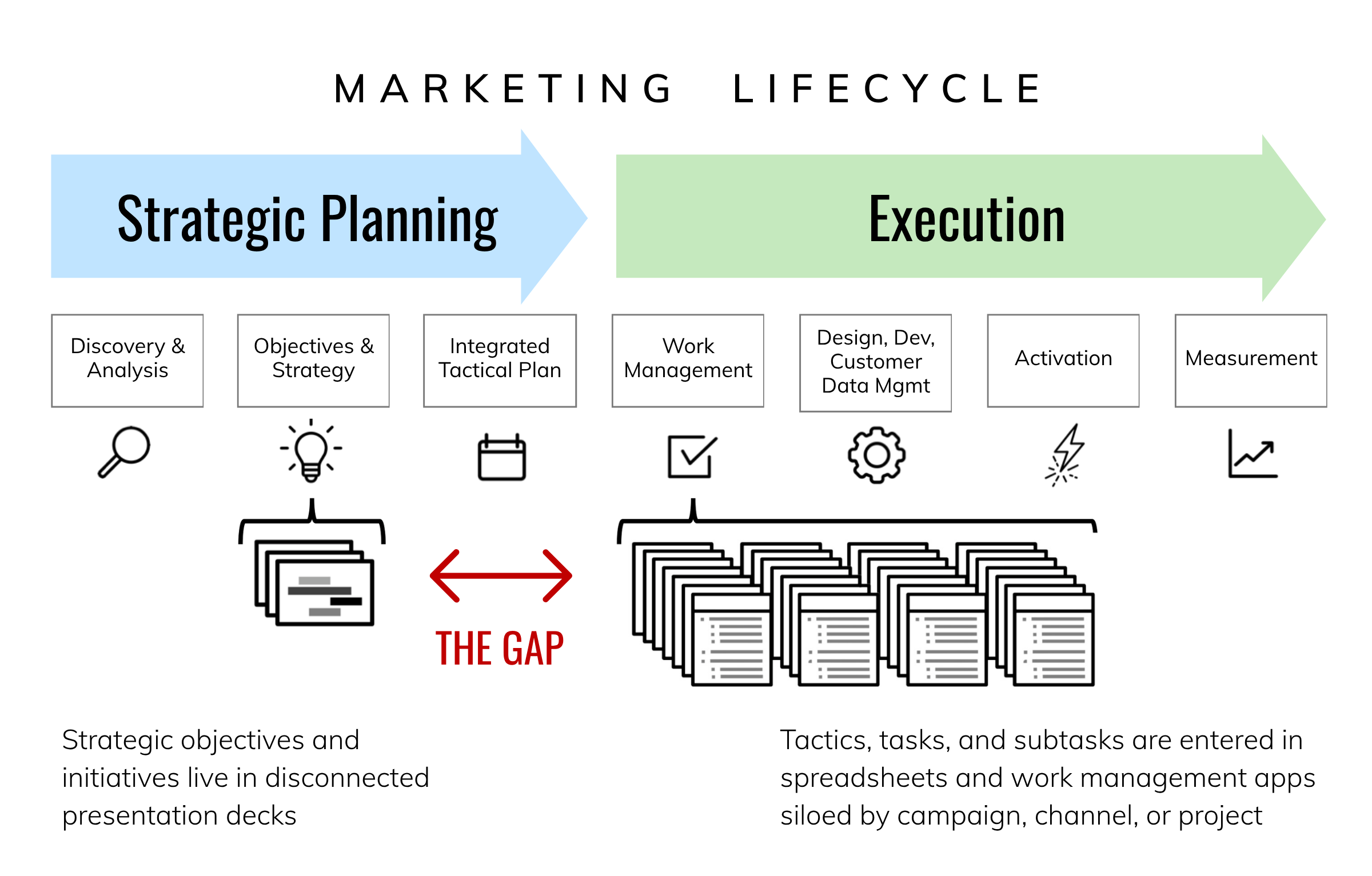
Click to enlarge.
Learn more about The Alignment Imperative.
How Unified Planning Works
Annum connects strategic direction, cross-functional tactical planning, execution visibility, and performance insight into one continuously aligned omnichannel planning model.
The model below illustrates how leadership and marketing teams maintain alignment throughout the planning lifecycle.
Leadership Establishes Strategic Direction
Unified marketing planning begins with leadership establishing strategic direction for the organization.
During annual planning, leadership establishes marketing objectives aligned to business goals, defines priority audiences, and maps major strategic initiatives, campaigns, and investment priorities directly within Annum across an annual planning calendar, creating shared visibility into the organization’s strategic marketing direction for the year.
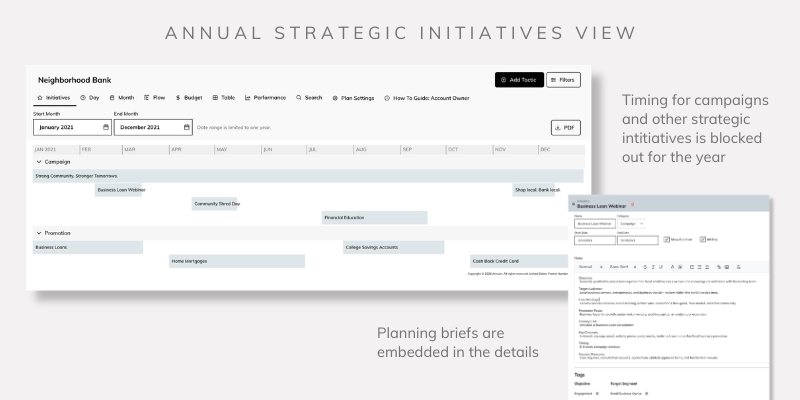
The Initiative’s view shows all strategic Initiatives blocked out across a full annual calendar.
As organizations move into quarterly and monthly planning cycles, strategic initiative and campaign briefs are fleshed out within the details of the initiatives and campaigns in Annum, providing teams with the context, planning direction, success metrics, and timing needed to operationalize strategy through integrated marketing plans.
This creates shared strategic visibility across the organization before tactical planning begins, helping teams align around clearly visible organizational priorities within one connected marketing planning environment.
✪ OPERATIONAL SHIFT
Strategic initiative timelines and campaign roadmaps move out of static annual planning presentations and into a connected planning environment with ongoing organizational visibility throughout the year.
Teams Build Integrated Omnichannel Marketing Plans
Cross-functional teams operationalize strategy by building integrated omnichannel marketing plans within one unified marketing calendar.
Teams define how messaging, channels, campaigns, content, timing, and customer touchpoints work together across the customer experience to support the defined audiences and marketing objectives, strategic initiatives and campaigns, and customer journey progression.
As tactics are entered into Annum, they are linked to strategic initiatives and campaigns and tagged against marketing objectives, audience segments, and other organizational priorities — creating a dynamic and filterable omnichannel marketing plan that teams can use to evaluate customer experience alignment, cross-channel coverage, messaging sequencing, and in market timing.
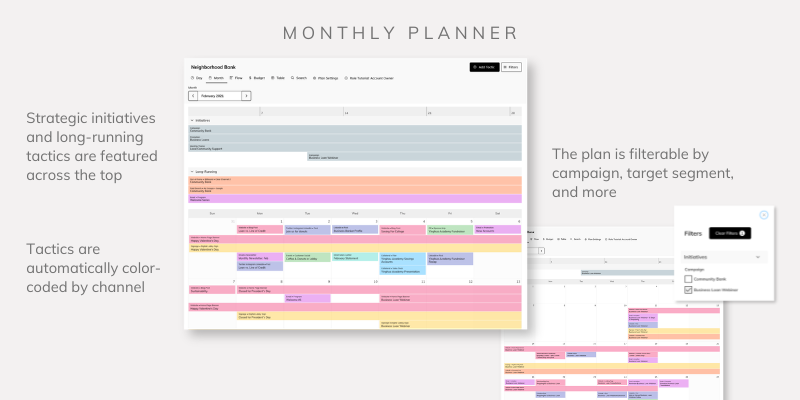
The Month view supports supports monthly planning by day. The Day view provides more granular visibility for planning and sequencing Tactics by time of day.
Planning & Execution Workflow Options
Annum supports different workflow models depending on how teams manage planning and execution.
- Plan directly in Annum – Teams use Annum as the centralized omnichannel marketing planning environment for building, reviewing, aligning, and guiding implementation of the marketing plan.
- Plan in Annum and synchronize to work management platforms – Teams build tactical marketing plans within Annum with full cross-channel visibility and synchronize tactics into work management systems to operationalize execution workflows.
- Plan in work management platforms and synchronize to Annum – Teams continue tactical planning within existing work management systems while synchronizing tactics into Annum for review of the integrated plan, cross-channel coordination, organizational visibility, and plan finalization.
- Bi-directional planning synchronization – Teams synchronize planning bi-directionally between Annum and work management systems, allowing updates to flow between systems while Annum maintains centralized omnichannel planning visibility.
✪ OPERATIONAL SHIFT
Plans are no longer siloed by channel, project, campaign, or execution platform. Teams shift from tactical planning disconnected from strategy to a connected omnichannel planning environment where tactics are directly linked to strategic initiatives, campaigns, and marketing objectives — and filters can be used to evaluate alignment, cross-channel coverage, messaging coordination, and customer experience support across the organization.
Learn more about integrations →
Leadership Reviews Plans for Strategic Alignment
As marketing plans take shape, leadership evaluates whether strategic priorities are being adequately supported across campaigns, channels, and customer experiences before plans are executed in market.
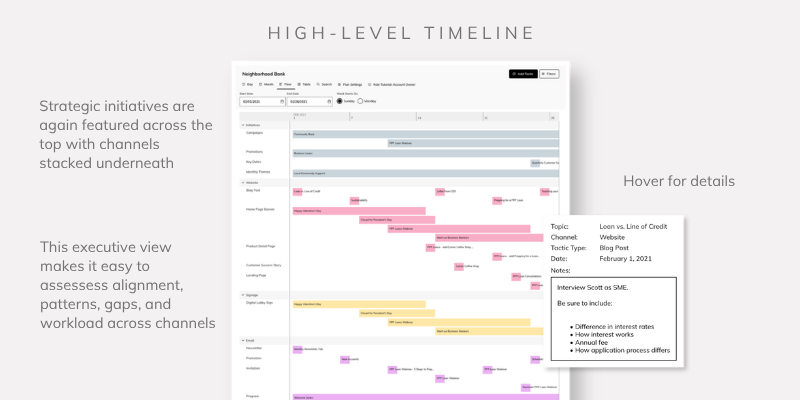
The Flow view presents a high-level timeline where leadership can evaluate alignment and patterns across channels as well as:
- Coverage by audience and marketing objective
- Support levels behind key initiatives and campaigns
- Gaps, disconnects, and opportunities across the plan
Strategic adjustments and recommendations are communicated back to planning teams before tactics move into execution.
✪ OPERATIONAL SHIFT
Leadership moves from reviewing siloed channel plans and executional details to evaluating strategy in action across the full omnichannel customer experience.
Teams Implement, Measure, and Optimize Plans in Real Time
Once plans are approved, teams bring them to life across customer touchpoints while monitoring performance insights and making cross-channel optimization moves in real time.
As execution and optimization unfold in market, Annum continuously reflects the evolving state of the tactical plan across teams and channels — helping teams maintain alignment around what is happening in market.
✪ OPERATIONAL SHIFT
The tactical plan becomes a continuously visible, living omnichannel plan throughout execution and optimization — helping cross-functional teams maintain alignment as plans evolve in market.
Results & Learnings Inform Future Planning
Each month, teams assess performance and develop reports summarizing results, insights, learnings, business impact, and recommended strategic optimization actions. The reports are embedded in Annum, shared across teams and presented to leadership to inform future strategic planning decisions.
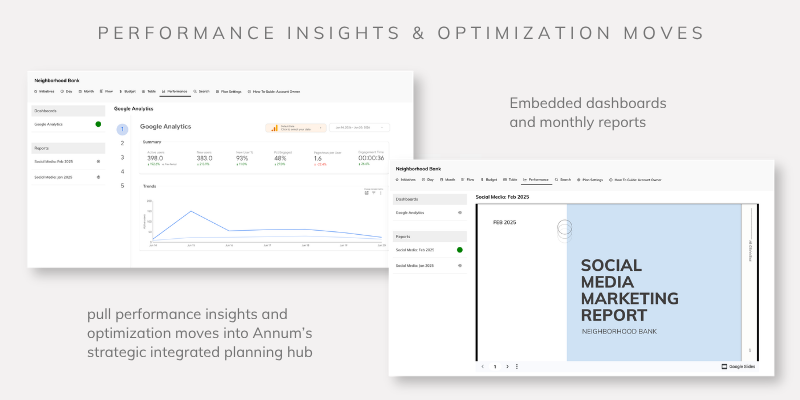
The Performance view serve as a window into this data.
Because Annum centralizes visibility across initiatives, campaigns, tactics, channels, and timelines, organizations gain clearer visibility into the broader marketing environment surrounding business outcomes — including what was in market, how channels aligned, what customers experienced, and what planning patterns may have contributed to results.
Annum serves as a historical marketing plan of record, helping organizations retain institutional marketing intelligence over time and make more informed strategic, operational, and investment decisions moving forward.
✪ OPERATIONAL SHIFT
Organizations move from fragmented reporting conversations and incomplete historical visibility to maintaining a continuously accessible historical view of what was actually in market, how plans evolved over time, and how marketing activity performed.
Unified, intuitive, C-suite presentation ready.
See Annum in action.
Explore how Annum helps marketing organizations connect strategy, planning, execution visibility, and organizational learning within one intuitive unified planning environment.